Today I crossed a small but real threshold in my baking — I started feeling the dough during mixing and adjusting water on instinct, instead of trusting the numbers on the scale alone.
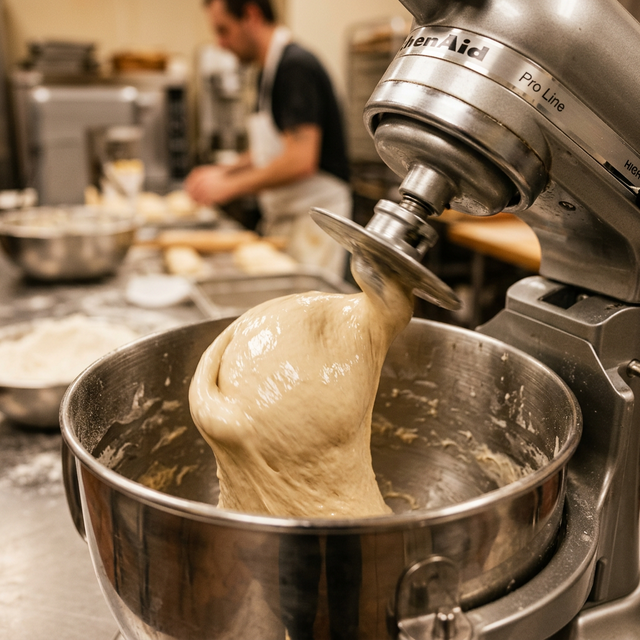
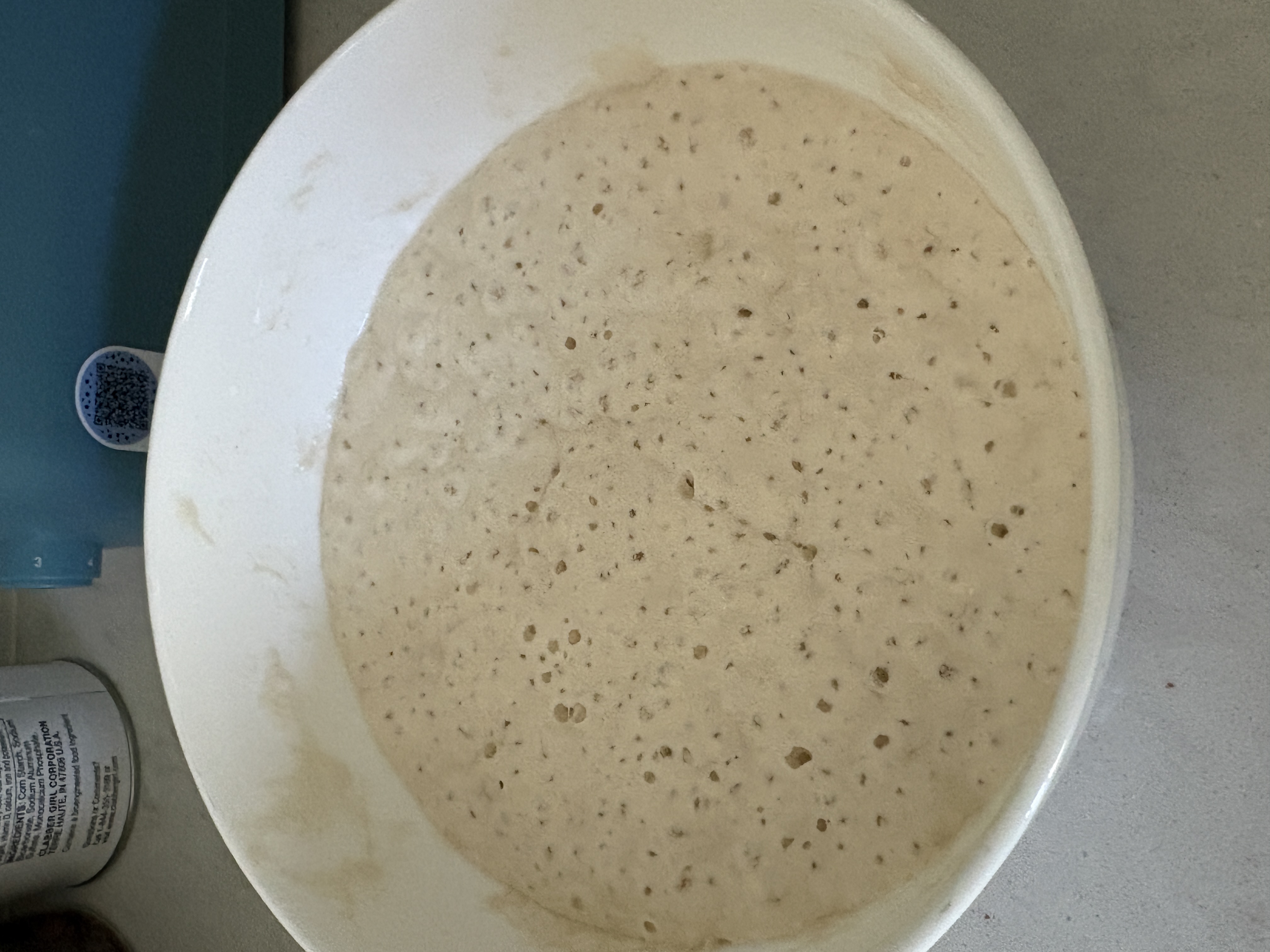
I was working on a mini loaf. On paper, the hydration looked reasonable. But the moment I got my hands in the bowl, something felt off. The dough was too slushy — the kind of loose, wet texture I'd expect closer to 80% hydration, even though my formula said something lower.
That's the thing nobody warns you about when you switch flour brands: absorption rate changes everything. The same baker's percentage can feel completely different depending on which bag you opened. One brand drinks water eagerly; another leaves you swimming in a sticky puddle that the recipe never promised.
So I didn't panic. I added more flour, a little at a time, until the dough finally felt right under my fingers — cohesive, with some resistance, no longer that soupy 80% sensation. It was an intuitive correction. The scale wasn't wrong, exactly; my flour just wasn't reading from the same script.
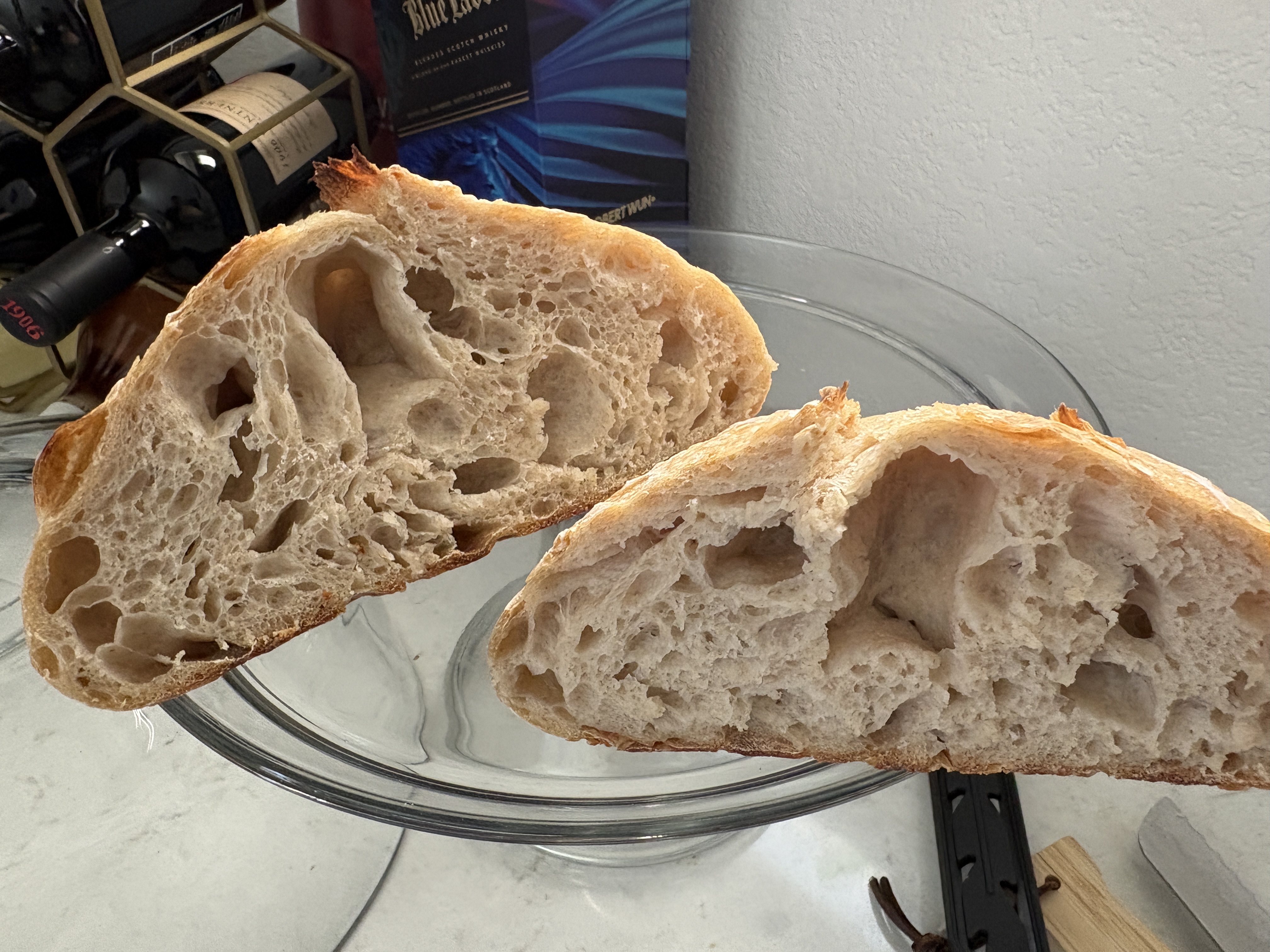
The bake rewarded that trust. The crust came out deep golden with a beautiful ear along the score — that raised ridge where the dough opened in the oven. Inside, the crumb had exactly what I was hoping for: open, irregular holes and a creamy interior. Good oven spring for a loaf this size. For a mini loaf, it was perfect.
What I'm taking forward: Record the flour brand next time, along with starting hydration, so I can track how different bags behave over bakes. And trust the dough — if it reads slushy at the mix, a flour correction is valid even when the formula says otherwise. The numbers get you close; your hands finish the job.